

Ready:
“No discipline seems enjoyable at the time, but painful. Later on, however, it yields the peaceful fruit of righteousness to those who have been trained by it.” —Послание евреям 12:11
Set:
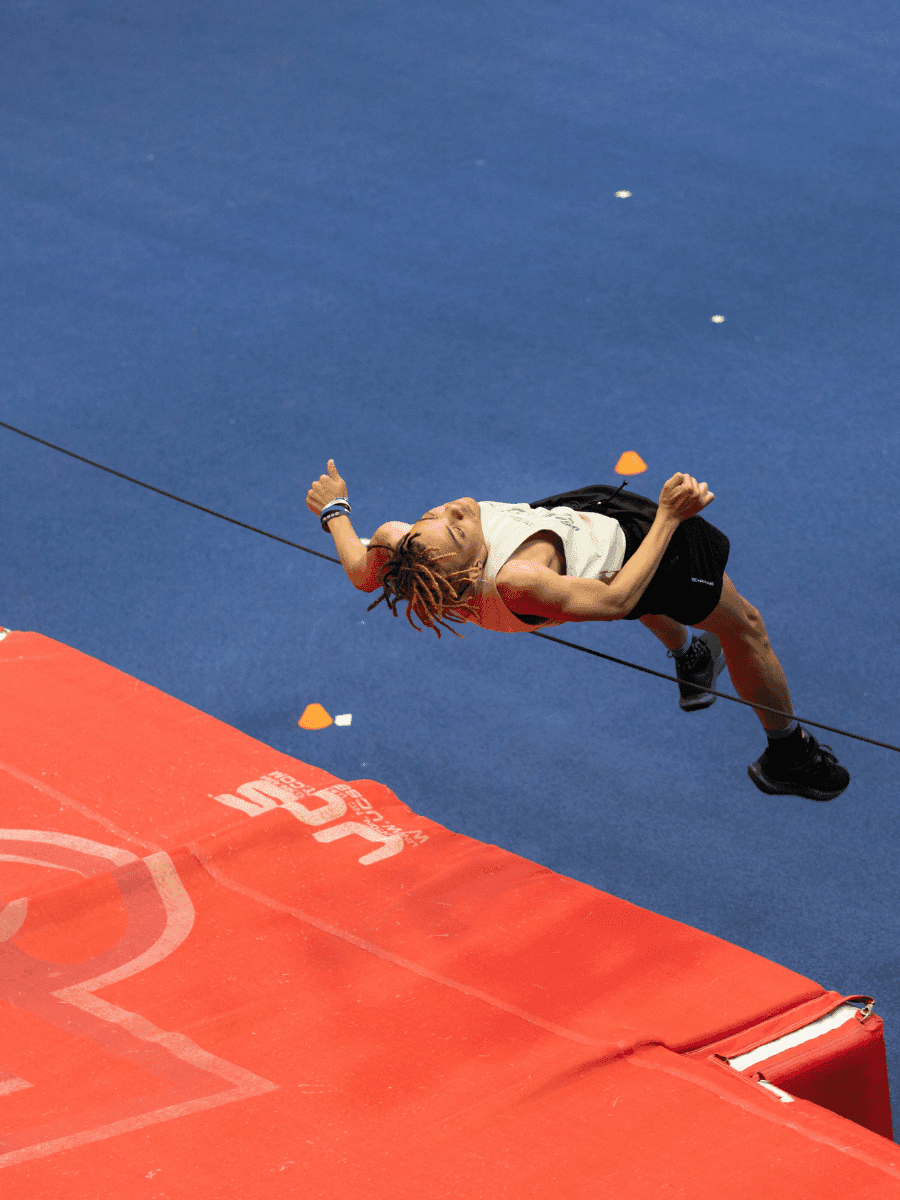
In 1968, Dick Fosbury won Olympic gold with a high-jump technique that looked completely wrong. Instead of attacking the bar face-first, Fosbury curved his approach, turned his back toward the bar, and sailed over it backward — to an Olympic-record height.
Imagine your coach training you to turn away from the high-jump crossbar and leap with movements that feel unnatural. At first, everything feels wrong. Still, you practice the approach. You trust the pivot. Then, one day, those awkward movements mature into your own Fosbury Flop. Trust kept you training.
Faith can feel counter-intuitive, too. We want to see where God is leading before taking the next step. But maturing faith learns to trust God's character without first seeing the outcome. Hebrews describes God's discipline as “training”, not simply punishment. Like the Fosbury Flop, training can feel uncomfortable “at the time” because we can't see the end result. That same Scripture reassures us that “later on” it will produce the “peaceful fruit of righteousness” — right choices from well-trained faith.
Abraham might be faith’s poster child, but His trust wasn't blind. During his life, he followed God without knowing his destination (Genesis 12:1–4), believed God's promise of an heir when age made it seem impossible (Genesis 15:1–6), and watched God fulfill that promise through Isaac (Genesis 21:1–3). Like Abraham, I may not understand the training, but I know the character of my Coach.
Your high jump practice could end in frustration. Even Abraham struggled. You might pray, “God, I'm tired and defeated.” Trust doesn't mean feelings of disappointment, frustration and exasperation aren't real. It means they don't have to determine your next step.
Faith is “the reality of what is hoped for, the proof of what is not seen” (Hebrews 11:1). Informed faith relies on what we've learned about our Coach — especially when the results are blurred. So, look around. Where have you seen God's faithfulness? Was it wisdom from Scripture? Encouragement from a trusted friend? Strength for a difficult choice? Provision you almost overlooked? Pay attention. Remember it. Then take the next faithful step.
Today's practice prepares tomorrow's trust.
Go:
Why is training hardest when you can't see results?
What have you already learned about God's character that helps you trust Him today?
Workout:
Overtime:
“My God and my Coach, remind me of Your faithfulness. Help me trust Your character through frustration. Keep training my faith. Give me courage to take the next faithful step. Amen.”